

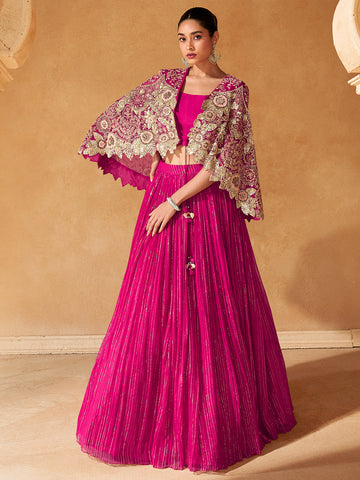
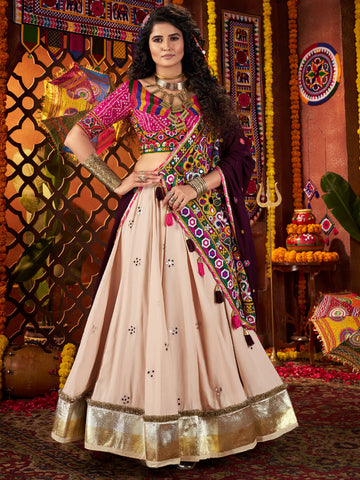
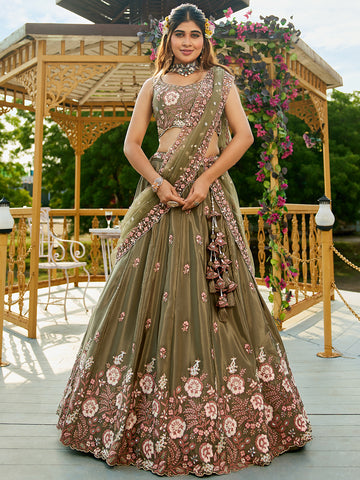
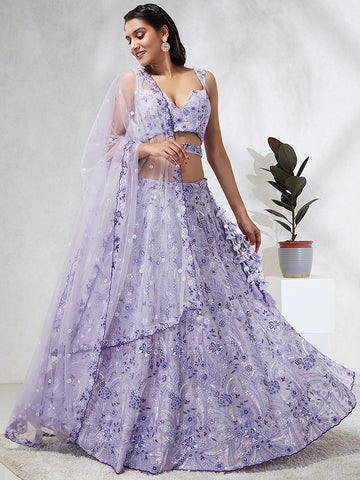
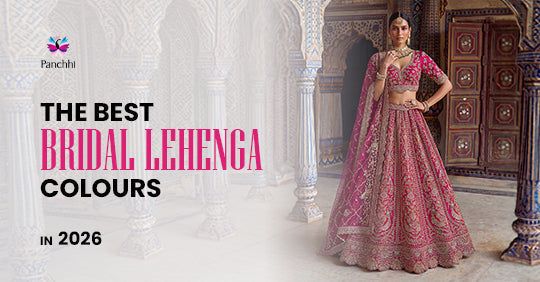
The Best Bridal Lehenga Colours for Indian Weddings in 2026: From Timeless Red to Modern Ivory
There is a moment every bride knows: you are standing in front of a screen full of beautiful lehengas, and suddenly every shade looks possible. Classic red. Dusty rose. Sage. Wine. Champagne. Ivory. Maybe even midnight blue.
So how do you choose?
In 2026, the bridal palette is wider than ever, but the smartest way to choose a colour is not to ask only, “What is trending?” Ask what the colour will do for your wedding function, time of day, jewellery, setting and photographs — and whether it still feels like you.
This guide brings together the colours shaping bridal lehenga conversations in 2026 with a more useful question: how do you make each shade work for your own wedding story?
The 2026 Bridal Colour Palette at a Glance
- Classic Red: timeless, ceremonial and unmistakably bridal
- Wine & Burgundy: deeper, moodier alternatives to traditional red
- Dusty Rose: soft, romantic and sophisticated
- Blush Pink: feminine without feeling overly sweet
- Sage & Pista Green: fresh, modern and naturally elegant
- Emerald & Sea Green: jewel-toned richness with a contemporary edge
- Rust & Terracotta: warm, earthy and especially beautiful outdoors
- Champagne & Gold: luminous and celebration-ready
- Ivory & Cream: understated, modern and highly editorial
- Midnight Blue & Deep Jewel Tones: dramatic choices for evening celebrations
Why 2026 Is Not the Year to Choose a Colour in Isolation
Current 2026 fashion coverage is already full of the same broad palette — dusty rose, rust, sage, champagne, ivory, blush and midnight blue alongside classic red. The opportunity is to go one step further.
Instead of asking “Which colour is trending?”, ask “Which colour tells my wedding story best?”
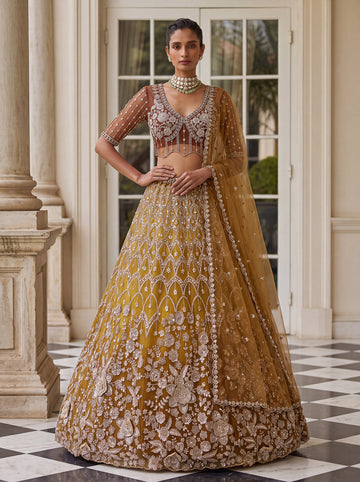
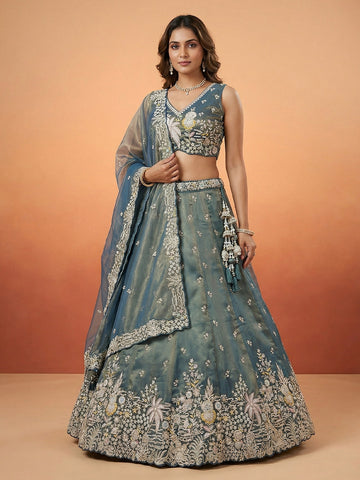
A colour can change completely depending on the fabric, embroidery and light around it. Burgundy in satin silk feels rich and evening-ready. Ivory in organza can feel airy and contemporary, while ivory with dense gold embroidery can become unmistakably ceremonial.
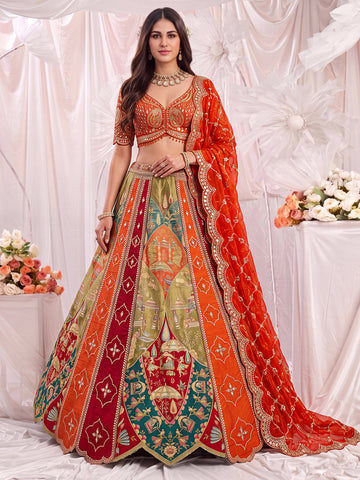
At House of Panchhi, our current lehenga edit makes that relationship especially visible: the same colour family can feel completely different once you introduce tissue, organza, georgette, satin silk, sequins, Zarkan or thread embroidery.
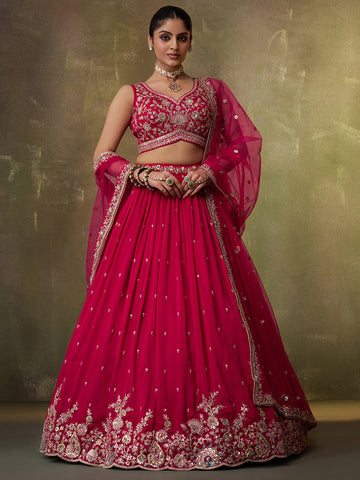
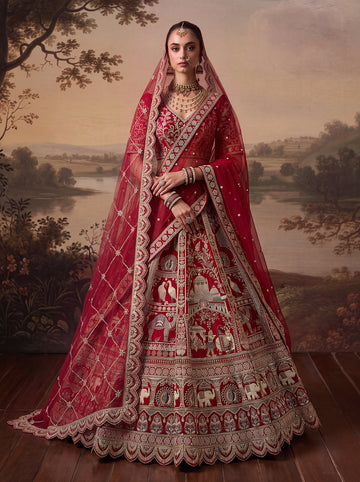
1. Classic Red: Because Some Colours Never Need Reintroducing
Red does not need a comeback. It has never really left.
Think of Deepika Padukone’s sindoori-red and gold Sabyasachi bridal lehenga: traditional in colour, dramatic in finish and instantly recognisable as a wedding look. Her bridal look remains a useful reminder that classic red does not have to mean predictable - the embroidery, jewellery and styling can make it entirely personal.
Best with
- Gold or antique-gold embroidery
- Kundan, Polki or traditional jewellery
- Evening or ceremonial settings
- Heritage venues and traditional mandaps
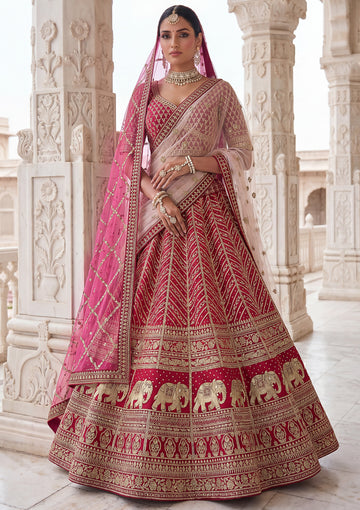
Panchhi styling insight: When the lehenga itself is richly coloured, you do not necessarily need to add more colour everywhere else. Let the red remain the hero and use jewellery as punctuation.
For a bridal-red direction from House of Panchhi, explore the 3074 Maroon Bridal Cutdana-Work Embroidered Lehenga Choli, a current Bridal Lehenga collection style with rich cutdana, zari and sequin detailing.

2. Wine & Burgundy: Red, But With a Lower Voice
If red feels right but bright bridal red does not, move one step deeper.
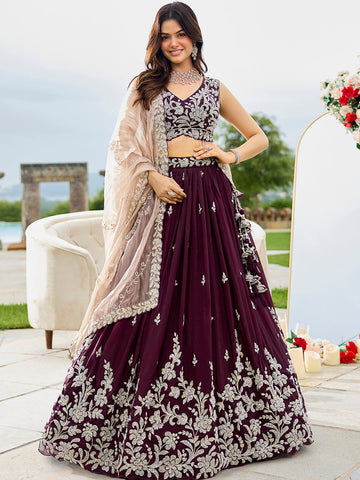
Wine and burgundy retain the warmth and ceremony associated with red while creating a more intimate, sophisticated mood. They are particularly effective for evening weddings, winter celebrations and venues with warm lighting.
One Panchhi example is the Burgundy Net Embroidery Sequence and Zarkan Work Semi-Stitched Lehenga Choli. Its net base with sequin and Zarkan embroidery shows how burgundy can keep a rich, dimensional finish while feeling deeper than classic bridal red.

Jewellery pairing
Try antique gold, Polki, kundan or deep gemstone accents. If the outfit is already heavily worked, keep the necklace more controlled and let the earrings or maang tikka carry the focus.
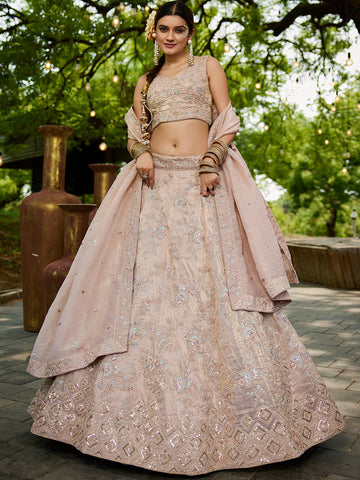
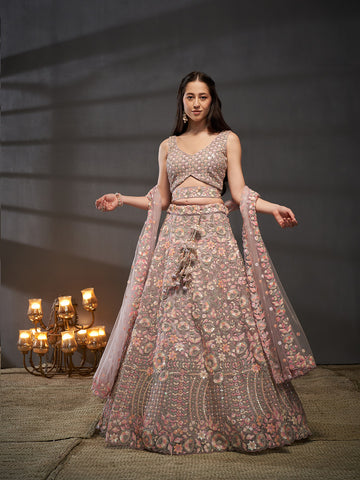
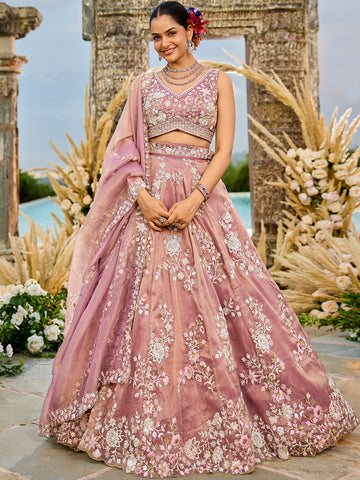
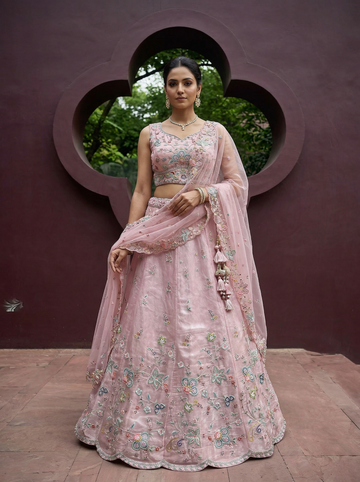
3. Dusty Rose: The Soft Bridal Colour That Still Has Presence
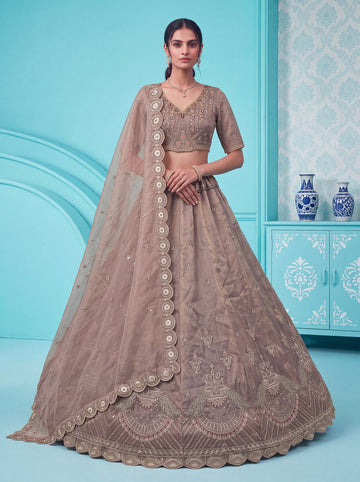
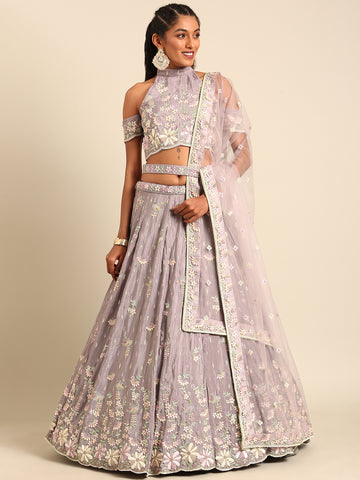
Dusty rose sits in that beautiful space between pink and neutral. It feels romantic, but not sugary; modern, but not cold.
Its biggest strength is versatility. In daylight, it can look soft and fresh. Under warm evening light, gold embroidery can make it feel considerably richer.
Anushka Sharma’s blush-pink Sabyasachi bridal lehenga is one of Bollywood’s most recognisable examples of a pastel bridal look. The important lesson is not to copy the shade; it is to understand why the shade worked with the setting, flowers, jewellery and overall styling.
Best with
- Antique gold
- Pearls and soft gemstone accents
- Floral styling
- Daytime ceremonies and destination weddings
Panchhi styling insight: If dusty rose is your base, introduce contrast through the embroidery rather than automatically choosing a completely contrasting dupatta. Gold, champagne, muted green and soft ivory can keep the palette sophisticated.
House of Panchhi’s 6198 Pink Net Sequins Embroidery Lehenga is a current in-stock example of this softer colour family.

4. Blush Pink: Feminine, Photogenic and Easy to Personalise
Blush pink is lighter than dusty rose and works beautifully when you want a softer bridal statement.
It is especially effective for brides who want their lehenga to feel delicate in photographs. Pair it with tone-on-tone embroidery for understated luxury, or introduce antique gold for a more traditional finish.
The important distinction is saturation. A very pale blush can photograph almost white in certain lighting, so embroidery and border contrast matter.
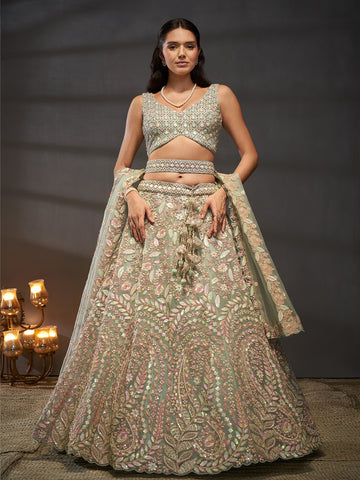
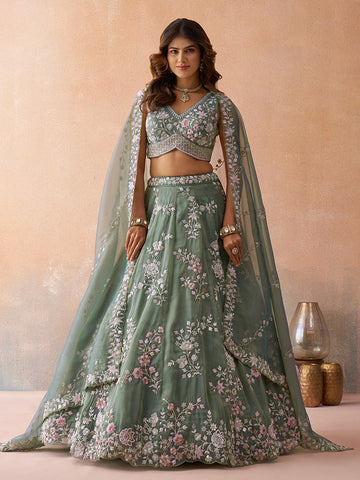
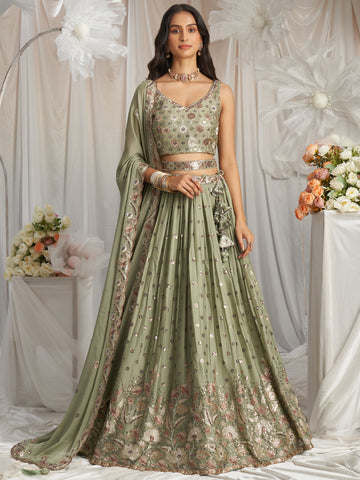
5. Sage & Pista Green: A Fresh Start for the Bridal Palette
Green has always belonged to Indian wedding dressing. What feels current is the range: soft pista and sage on one end, saturated emerald and sea green on the other.
Pista works especially well for daytime ceremonies because it has the freshness of green without the visual intensity of a jewel tone.
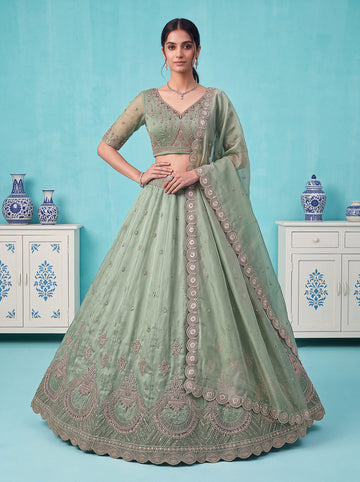
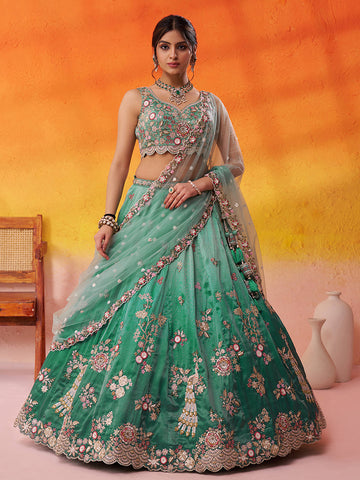
House of Panchhi’s 5829 Sea Green Multi-Sequins Heavy Zarkan Net Embroidered Lehenga is a current in-stock example of a softer green direction that still feels richly embellished.

6. Emerald & Sea Green: When Green Gets Dramatic
If pista whispers, emerald speaks.
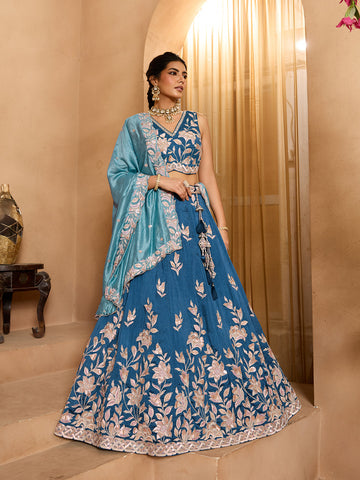
Deep green works especially well for evening ceremonies because it creates a rich backdrop for gold embroidery and gemstone jewellery. Sea green can sit between pastel and jewel territory, giving you more room to play with contrasting embroidery.
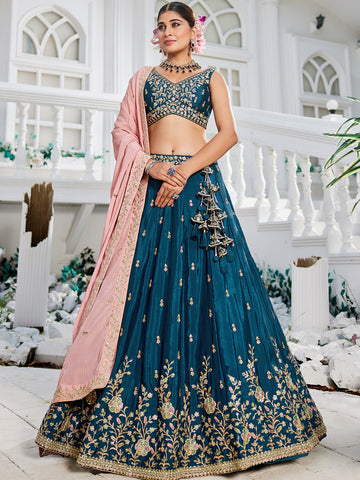
For a more ornate direction, Panchhi’s 6215 Rama Silk Fabric Beads & Sequined Embroidery Lehenga pairs a teal-green base with bead, sequin and thread embroidery, making it a strong option when you want a deeper green-family look.

7. Rust & Terracotta: The Warm-Weather Romantic
House of Panchhi’s 6311 Rust Tissue Moti Embroidered Lehenga Set brings this earthy palette to life with tissue, moti, sequins and thread embroidery.

Rust and terracotta feel familiar without looking like conventional bridal red. They borrow warmth from red and orange while sitting beautifully against sandstone architecture, greenery, marigolds and sunset light.
For an outdoor wedding, this family can almost become part of the setting. Pair it with antique gold, ivory accents or warm floral styling.
8. Champagne & Gold: For the Bride Who Wants to Glow
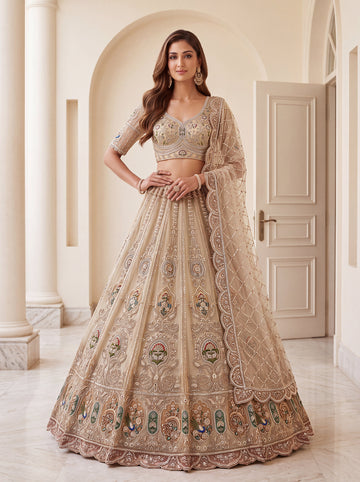
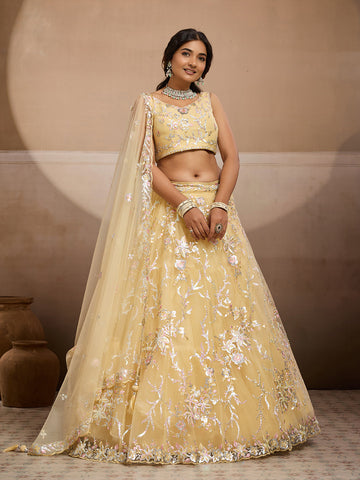
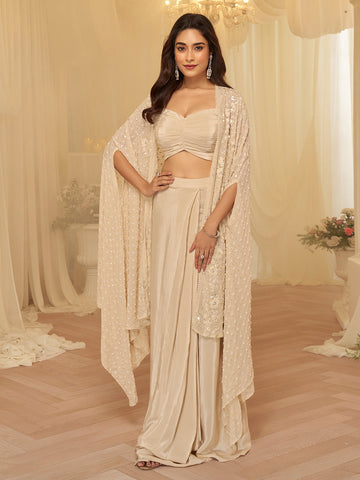
Champagne is not simply beige with shimmer. When done well, it creates a luminous bridal look that lets texture and embroidery take centre stage.
It is particularly effective for evening receptions, cocktail-style celebrations and modern venues where lighting is part of the visual experience.
One of Panchhi’s most useful lessons here is that sheen can create richness without needing a very dark colour. Tissue and sequins catch light differently from satin or matte fabrics, giving champagne and gold several distinct personalities.
9. Ivory & Cream: The Modern Bridal Statement
Few colour conversations have changed as much as ivory.
Alia Bhatt’s 2022 wedding is a useful Bollywood reference. Rather than choosing a traditional red lehenga, she wore an understated ivory Sabyasachi sari with a matching blouse and tissue veil. The look showed how a restrained palette can still feel unmistakably bridal when craftsmanship and styling are strong.
For brides who love that quieter mood, ivory is less about being minimal for the sake of minimalism and more about allowing texture, embroidery and jewellery to breathe.
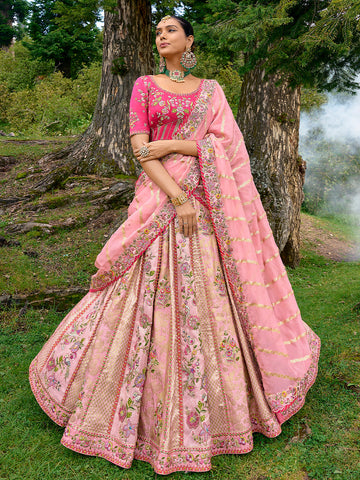
House of Panchhi’s 6166 Cream & Pink Tissue Sequined & Zari Embroidered Lehenga shows another side of the palette: a creamy base can feel luminous and romantic when paired with pink accents and rich embroidery.

10. Midnight Blue & Deep Jewel Tones: The After-Dark Bride
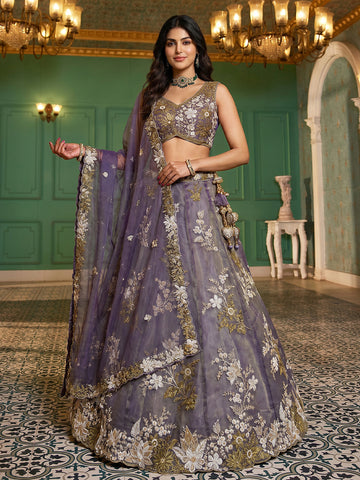
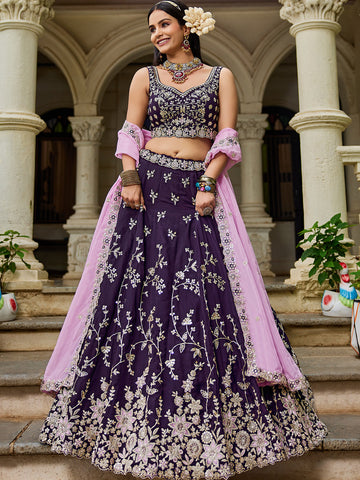
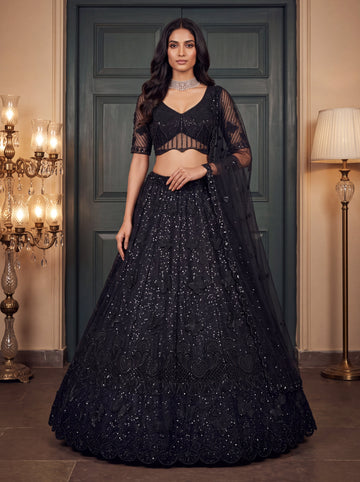
Midnight blue, deep navy, purple and other jewel tones are made for evening light. They offer drama without relying on red and create beautiful contrast with silver, diamonds, kundan or antique gold.
Panchhi’s 5878 Navy Blue Multi-Sequins & Thread Work Embroidery Net Semi-Stitched Lehenga demonstrates how navy can create an after-dark statement with multi-sequin and thread embroidery. The Navy Blue variant is currently in stock.

How to Choose Your Bridal Lehenga Colour by Wedding Function
| Function | Colour directions | Why they work |
|---|---|---|
| Engagement | Blush, dusty rose, champagne, lavender | Polished without feeling overly bridal |
| Haldi | Yellow, mustard, orange, fresh green | Bright, joyful and daytime-friendly |
| Mehendi | Pista, sage, pink, teal, multicolour | Playful and photogenic |
| Sangeet | Rose gold, purple, emerald, deep pink | Works beautifully under evening lighting |
| Wedding Ceremony | Red, wine, emerald, ivory, gold | Feels ceremonial and considered |
| Reception | Champagne, ivory, navy, jewel tones | Refined and evening-ready |
For a complete function-by-function wardrobe guide, read our guide to what to wear to every Indian wedding function.
How to Choose a Bridal Lehenga Colour That Photographs Well
Daylight
Pastels, sage, pista, dusty rose and ivory can look especially delicate in natural light. Make sure there is enough embroidery or border definition so the outfit does not disappear against a pale venue.
Golden hour
Warm sunlight works beautifully with rust, terracotta, wine, champagne and muted pinks. Gold embroidery can look especially rich during this window.
Indoor evening lighting
Deep greens, burgundy, purple, navy and saturated pinks hold their depth beautifully. Reflective embellishment such as sequins and stones can add dimension when the light is lower.
Jewellery Should Follow the Colour, Not Fight It
- Red, wine and burgundy: antique gold, kundan, Polki and emerald accents
- Blush and dusty rose: pearls, pink stones, antique gold and delicate diamonds
- Pista and sage: gold, pearls and softer gemstone accents
- Emerald and sea green: kundan, Polki, diamonds and antique gold
- Ivory and champagne: gold, diamonds, pearls and tone-on-tone styling
- Midnight blue and purple: diamonds, silver, white stones or restrained gold
The goal is not to match every element exactly. A little contrast is often what gives the outfit dimension.
Skin Tone: Think Undertone, Not Rules
We would not reduce bridal colour selection to a rigid “fair skin versus dusky skin” chart. Real skin tones are far more nuanced.
Instead, think about your undertone and the intensity of the colour. If warm colours naturally flatter you, explore rust, terracotta, warm reds, gold and warm pinks. If cooler colours feel better, try lavender, blue, emerald, cooler pinks and sea green. If you are unsure, choose a colour you already know you love and change the depth — for example, blush to dusty rose or red to wine.
The Panchhi Colour Compass: Three Questions Before You Buy
1. What do I want people to remember?
Traditional red says timeless. Ivory says modern. Emerald says dramatic. Dusty rose says romantic. Rust says warm and individual.
2. When will people see me?
Daylight, golden hour and evening lighting all change the way colour behaves.
3. What will I wear with it?
Your jewellery, makeup, dupatta, footwear and even the wedding décor should be part of the decision.
That is the difference between choosing a colour and building a bridal look.
Four Panchhi Styling Principles We Keep Coming Back To
- Colour should have a job. A bridal shade should create the mood you want, not simply tick a trend box.
- Fabric changes colour. Tissue catches light differently from organza; satin silk gives depth; georgette creates movement; net lets embellishment appear lighter.
- Embellishment can be your contrast. If the base is soft, let gold, silver, coloured thread or sequins provide definition instead of automatically choosing a darker skirt.
- Photographs need dimension. A beautiful bridal colour becomes much stronger when there is contrast between the base, embroidery, border and accessories.
A Colour Is a Memory Before It Is a Trend
Years from now, you may not remember the exact shade name printed on the product page.
You will remember the way the colour looked when you walked into the mandap. The way the embroidery caught the light. The photograph your mother loved. The way your jewellery looked against the blouse. The moment you saw yourself fully dressed and thought, this feels like me.
That is why the best bridal lehenga colour for 2026 is not necessarily the newest one.
It is the one that makes your wedding feel unmistakably yours.
Frequently Asked Questions
What is the most popular bridal lehenga colour in 2026?
Classic red remains a major bridal choice, while dusty rose, blush pink, sage, emerald, rust, champagne, ivory and deep jewel tones are giving brides more ways to personalise their wedding look.
Are red bridal lehengas still trending in 2026?
Yes. Red remains a timeless bridal colour, but brides can choose between different depths such as crimson, ruby, maroon, rust-red and wine rather than treating red as one single shade.
Is ivory a good colour for an Indian bridal lehenga?
Yes, particularly if you want a modern, understated look. Ivory becomes more distinctly bridal when paired with Indian embroidery, rich borders, jewellery and a considered dupatta.
Which bridal lehenga colours work best for daytime weddings?
Pista, sage, dusty rose, blush, lavender, cream and other lighter shades can work beautifully in daylight. The venue and amount of embroidery should also influence the final choice.
Which bridal lehenga colours work best for evening weddings?
Burgundy, wine, emerald, deep pink, midnight blue, purple, champagne and gold can work particularly well under evening lighting because they hold depth and interact beautifully with embellishment.
What jewellery should I wear with a red bridal lehenga?
Gold, antique gold, kundan, Polki and emerald-accented jewellery are classic options. If the lehenga is heavily embellished, balance the jewellery rather than matching the intensity everywhere.
How do I choose a bridal lehenga colour for my skin tone?
Start with colours you already know you enjoy wearing, then consider whether warm or cool undertones suit you better. Rather than following rigid skin-tone rules, look at the full combination of base colour, embroidery, jewellery and lighting.
Can I wear a pastel bridal lehenga for the wedding ceremony?
Absolutely. Pastels can feel ceremonial when the silhouette, embroidery, jewellery and styling are substantial enough. Anushka Sharma’s blush pink bridal look is a well-known example.
Explore the House of Panchhi Lehenga Edit
Ready to find the shade that feels like you?
Explore the House of Panchhi Lehenga Collection →
For a broader wedding wardrobe, explore our Engagement, Mehendi and Sangeet edits.
 Online